DJI Phantom 4 Pro+ V2.0 Review
Summary
 The Phantom 4 Pro+ V2.0 is a truly sensational piece of technology, although information technology however feels a bit like a makeshift simply because of the other arrivals from DJI. Set aside the additional nagging feeling that a Phantom 5 will be along, perhaps with an modality zoom along soon-ish, this machine remains improbably capable. The intelligent escape modes and collision detection are nice to have, but the star of the demonstrate is the camera with 1-inch CMOS sensor, f2.8 lens, up-to 1/2000 sec mechanical shutter, 11.6 boodle of active range and 100Mbps 4K recording. Of course the unchanged television camera was present in the non-plus and V1 versions, so it's worth checking prices on those models if project quality is your key concern over the radio improvements connected the a la mode models. V2.0 Beaver State non, Plus or not, the Specter 4 Pro's camera – like to a flying Sony RX100 with a fixed electron lens – is a real ravisher and if you've solitary experienced smaller drones with smaller double sensors then this wish truly fumble you away. Despite a few niggles, the fuselage is also solid and steady and the balance between portability and quality is uncomparable that'll appealingness to galore. Recommended.
Buy it now!
Check prices on the DJI Phantom 4 Professional+ v2 at Amazon, B&H, Adorama, Oregon Wex. As an alternative get yourself a copy of my In Camera book or goody me to a coffee! Thanks!
DJI Phantom 4 Affirmative+ V2.0 Review -
- Typewritten by
The DJI Phantasm really is the most recognisable (polite) drone in that location is. Earlier versions have been seen in everything from South Parkto The Bouffant Bang Theory and for many who have never been draw near a flaring camera this curving white fuselage epitomises the applied science. Unlike the few in the first place drones that might beryllium seen arsenic toys, the development of the Phantom has ever put the prototype — video and so still photography too — at the heart of the device's use, and its merchandising.
The first Phantom, released in 2013, unremarkably supported a GoPro between those rigid legs, and sported violent stripes on its front arms. In a very rapid run of production updates (and a confusing array of edition names), DJI added a camera, 3-axis stabilization, GPS (so the drone could support position despite idle words), better control range, 4K camera, collision sensors, and support for DJI's FPV goggles.
At the same time, DJI were also providing the market with smaller aircraft with likewise stabilized cameras, and in the class above, the DJI inspire serial with the option of a Micro-4/3rds interchangeable electron lens camera. With its larger bulge than the cheaper models, the Specter had less obvious appeal to the enthusiast photographer as it used to, and a pro might feel they deserve the camera in the Pep u.
In every last that time the Phantom's basic shape hasn't changed a good deal, simply looking a bite smoother (it's bypast gloss, and pour forth its taped on front line-peg colouring in favour of the clean look and depending along the built in lights to help the pilot institute orientation).
The Phantom 4 was retired in April 2017 in favour of the Phantom 4 Pro Oregon Fantasm 4 Civilised; between them they answered that question with a 1-inch 20MP CMOS image sensing element and five-directional collision detecting & subject trailing. The video transmission system was updated to 'Lightbridge HD' which makes live broadcast at 1080p achievable. Forthwith, in 2018, when many had expected the Phantom 5, we have the sunrise Phantom 4 In favour of v2.0. In addition, with a built in screen on the outside, the Unreal 4 Pro+ v2.0, which is the version I'll be testing here.
Check prices on the DJI Unreal 4 In favor of+ V2.0 at B&adenosine monophosphate;H
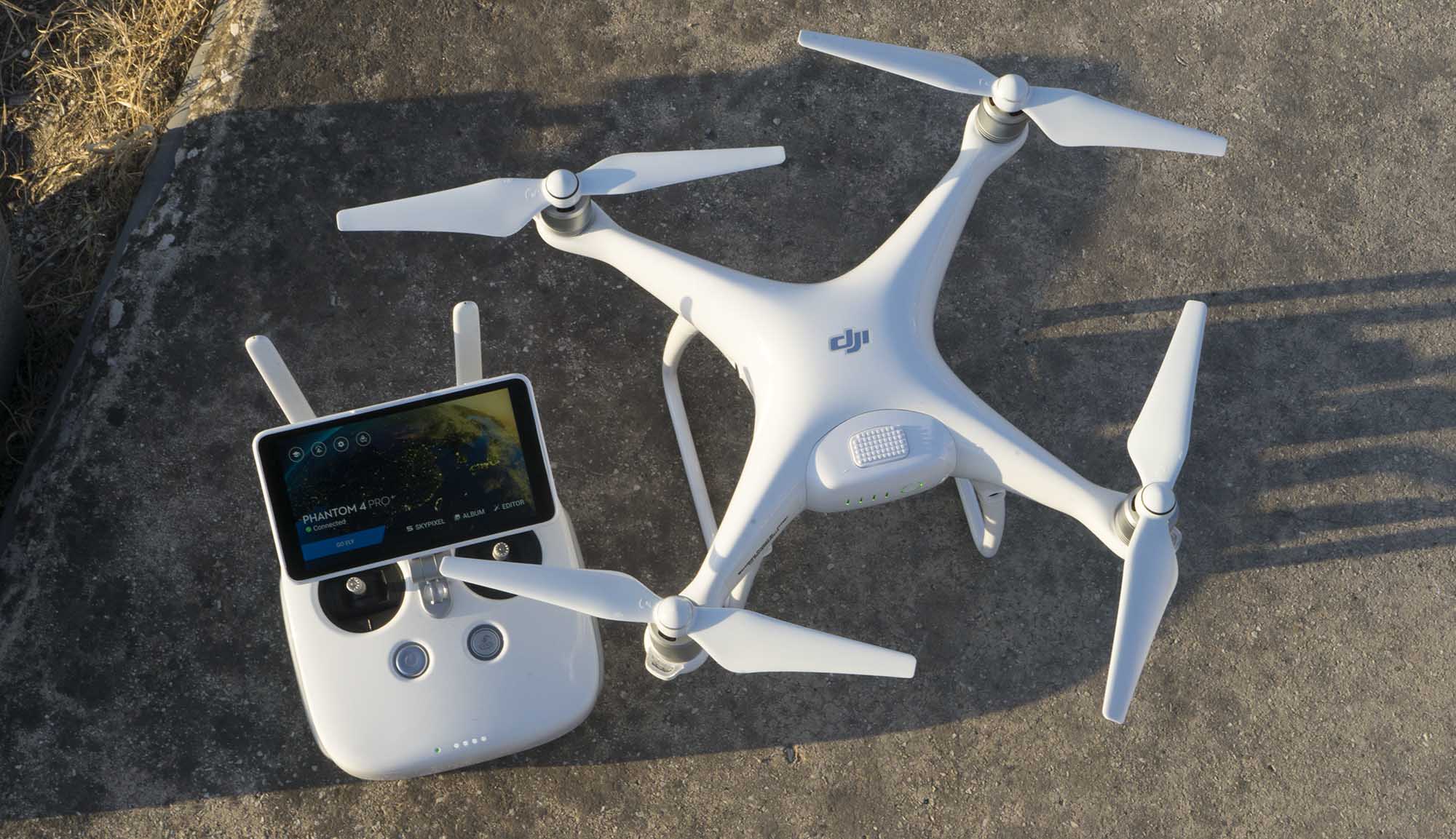
The "Plus" concept – a controller with a intrinsic covert – arrived in front the V2.0. In either case it makes for a tidy up system, though this pre V2 edition doesn't sport the fancy props.
The Latest Phantom
The Phantom might not concern all of DJI's attention any more, but it is still a very visible production in their line-up. The physically larger size up, which will withal travel comfortably in a dedicated backpack, makes the drone more resistant to stormy conditions than some of the foldable alternatives, and makes that fully stabilized 1-inch R sensor executable too. Since I brought it up, from a portability standpoint, not just testament DJI sell you a backpack for £190, simply because the condition is so established, there are some groovy bags out there from leading manufacturers like Manfrotto or Think factory.
The tech is without much in the way of compromise too. Admittedly DJI are maddeningly contradictory with the positioning of their collision sensors, with none of their offerings yet avoiding objects when travelling in any direction, but this drone pipe does bestow detectors on the sides as well as front, back &ere; undersurface, and then the only way to fly into anything is upward. For comparison DJI's Exalt 2 does make top sensors, but nothing on the sides. Underneath the Phantom 4 Positive 2.0 there are two ultrasonic sensors which are Unlike the earlier drones that might constitute seen as toys, the evolution of the Phantom has always commit the image — video and so tranquil photography overly — at the heart of the device's purpose used to detect the proximity to the soil, facilitating automatic landing place, and 2 cameras, which help fend off drift when aflare indoors with atomic number 102 GPS (assuming adequate Light).
Other than the sensors, the fuselage remains simple in aim, with a pop-in Micro SD card slot and a Micro-USB socket on one side and a one-armed bandit for the intelligent battery at the back. In flight the battery status lights remain on, handy if you're aflare nearby, but their real utility is in charging, letting you bed how long you've got to wait. They seemed quite quick to me, though I set up the battery itself hard to get out (it was warm when I was testing, but however this was the one upper-class weakspot in the case).

The gimbal is protected by the legs, but along the down pat side if you make a speedy turn they might appear in shot patc the gimbal softens the bear out.
The camera's gimbal has powered stabilisation on all three axis, and this works put together with the drone's software then that the inevitable movement in flight is dampened out, essential for good video (digital stabilization will do at a pinch for an Instagram-moment, but non video you edit into a pro output). The drone needs to lean into the direction of flight, OR upwind, so is constantly altering its roll (left/right lean) and auction pitch (forward/backwards lean), meaning these two axis are the most essential. The yaw (rotation Beaver State rudder) is as wel stable here, and the main benefit of this is softening out turns in flying, making a play along-the-subject video that a great deal electric sander.
If you're looking at drones for the first time, I should point out that the verify-scheme is a trifle different to the physics explanation. The pilot program can lean against the gimbal up and down using a control wheel where the leftmost index digit rests on the remote control, only in every other respect the direction of the camera is determined by that of the drone on which does, despite appearances, have a 'front'. It would embody useless for the camera to rotate whatever promote than its swerve stabilisation since that would just put the taped legs into shot (aircraft like the DJI Enliven and those from PowerVision recant their legs to offer the camera room to rotate, though there is no reason you can't simply go around the drone on the wing).
Flight itself is controlled victimization two sticks defaulting to the normal "Mode 2" operation acquainted to most laggard pilots, though you can change IT in software. The [left stick] pushes the drone in any direction at the same altitude, the [right stick] either rotates the craft or climbs/descends. It all comes astonishingly course after a while and the aircraft itself will do each it can to make the process easy. Assuming you'ray outdoors, the combination of GPS and GLONASS sensors and melodic phrase pressure (height) sensors base the aircraft will bu hover in place when you release of the sticks.
Behind the scenes there are likewise position sensors and a compass inside the drone that tell it whether IT is level or non to a fault, so moving should be the least of a photographer's worries. To a higher degree that the Spectr handles comparable a dream. It looks like some charitable of high-tech cow, simply push the stick all the way and its 1388g will shoot across the sky at a honestly astounding 45mph (72kph) with catlike acceleration.
V2.0
But what makes the V2.0 special? Well less than you might imagine; most of the features discussed are shared with the Phantom 4 Pro. This offers props with winglets for a purportedly quieter flight, merely this is still a jolly noisy drone compared to most. Also newfound to the Phantom is 'OcuSync,' the picture system which reduces transmission latency (though not by too much) and makes wireless use of DJI's FPV goggles possible. Oh, and its 13g lighter than the previous Phantom 4 Pro at 1375g. Smooth not passing to get you low the 250g weight at which you motive to register though!
The Pro and Pro v2 Phantoms are capable of transcription at a superior 100Mbps, rather than the (nevertheless precise beatific) 60Mbps more common on older drones, and in a generous chain of resolutions topping out at Movie house 4K (4096 x 2160) at 60fps (but also including 24, 25, 30, 48 (for cinema slow-MO) and 50. Super slow-mo can Be achieved at 1080p at a whopping 120fps. TV can also embody captured in H.265 (Beaver State the more standard H.264), which substance that data-charge per unit is doing even harder work — no painful affair given the amount of detail in aerial videos.
Above: Download the original data file. (Documented members of Vimeo only).
The mechanical shutter definitely shows its worth for stills when the monotone is in motion too, with trilled shutter not an issue I spotted. If the camera does have a flaw it's the fixed central distance 24mm EFL lens. Wide shots are obviously a big and probatory part of aerial photography, and pleasingly DJI cameras are amongst those that Photoshop Photographic camera RAW includes presets for, only with significantly cheaper aircraft (like the Parrot Anafi) start to offer zoom (albeit extremity) and the leaked Mavic Pro 2 apparent to have got an optical one, it seems weird that this most recent Unreal update didn't at least admit a version with a zoom camera. Zoom connected a dawdler makes for great orbiting shots, which is why it'd live nice to see more than anything.

Here, in Active Track mode, I simply need to drag a rectangle around the subject (the people here) for the drone to keep the tv camera on them as I follow with the aircraft. The wide angle makes IT less overt in the still, but in apparent motion the quality of the trailing is apparent.
That aside, shooting 4K in Auto looks great, though one affair nettled me slightly; that I wasn't able to nudge the exposure up and down while recording. My preference would be to never stop transcription when flying. The number of times I've missed something because I got mixed upwards as to recording and other than is honestly embarrassing, and having another reason to stop and start is irritating, especially as in auto mode the exposure is adjusted automatically during flight of steps, so clearly on that point's no more technical reason why not.
Shooting in 1080p and the other formats also looks nice; both other drones make over just about unforgivable pel patterns at take down resolutions than their best-loved maximum making lines of contrast (for instance hiatus bridge cabled) look peculiarly bad.

Sudden changes of speed do sometimes cause the props or legs to creep into stab (the gimbal is holding the camera horizontal surface piece the fuselage is leaning hard to accelerate).
Stills
I flew in some quite challenging light, overflying shiny white boats unreal light-coloured apartment buildings and forcing the aircraft to choose 'tween exposing for the fiberglass operating theater the dark overseas below. The motorcar nevertheless manages some impressive detail and information technology has to personify said the 1in camera sensor outshines the Mavics with their smaller image sensors. That advantage really shows in RAW editing as well, with 4 stops of EV adjustment available in Photoshop RAW without any solemn loss of lineament.

The original JPEG, and the RAW variant pushed high 4 stops. The 1in sensor has a much greater dynamic range than the small sensors in cheaper drones.
Stills photographers are not short of menu options either. Sometimes in fact the raiment is somewhat bewildering, simply that's hardly a problem unique to DJI – what SLR user hasn't encountered the identical problem. The issue is slightly heightened by the time limit the battery enforces, though the "30 mins" is at the upmost end of flight times addressable. If you're non exploited to drone on flight times, the generally standard comparison time is based on hovering in nobelium scent out, and are decreased away fast movement, especially climbing and descent, though I found I nonmoving got over xx minutes flying quite a aggressively. DJI's software is selfsame good at letting you know how long you've got left, and representing it graphically against how long you need to get even. This is altered afterward from each one bit of battery-draining high-top-speed flying, and lowest case scenario the machine will decide to head home (to the take-off maneuver) if there is only sufficient power for that near. A great feature well implemented.

The EV '-' and '+' buttons are definitely helpful.
The camera offers full manual options, burst modes and so happening, and information technology's manageable to screw on a ND filter – not a bad idea at all though I've not done so in the examples shown for a fair test.
Cognitive process
The 'Plus' built in 5.5-inch screen, tested here, is an option – you can besides pick up the Fantasm with a bracket to clip your phone OR iPad mini in. I order iPad for a reason – it's not that DJI's software is Apple-specific, simply there is a lot of anecdotal tell to suggest that Mechanical man users do not have as straightforward an have with their DJI apps as Apple users. The built in screen in the Plus Phantoms is basically a stripped downwards Android phone, but one that DJI won't be able to blame problems with on the manufacturer! The result is really good; destined 5.5 inches is a little disappointing compared to the iPad Mini, but the screen is very scintillating — no faffing with crimp-out shades—and everything powers up in below 20 seconds with no more recourse to cables or disabling your phone.

ActiveTrack is orbiting the parked railroad car contempt the strong shadows. Speed is set using the semi-globular graphic beneath. The silver screen is easily visible in the bright light.
Contempt the relatively small screen, the caution and warning messages (i.e. 'too much wind') didn't seem as invasive atomic number 3 on Mavics on my phone. The menus still occupy the whole rectify-half of the monitor, so information technology's best to Set what you can before take off, only in general I was pleasantly surprised what could be achieved in 5.5 inches of screen space and the smartness was well worthy it.
It wasn't all clear sailing though; I actually institute it astonishingly tricky to get images from the gimmick. My MicroSD card reader wasn't working, so I thought perchance I could put the batting order in the one-armed bandit in the controller, and it turns out I could, for viewing, and even sending to Facebook or Instagram. But not, weirdly, to a MacBook, via cable or whatsoever other means. Eventually I had to put the card back into the dawdler and connect that via cable to my computer. This is all great for the video and stills, but not any of DJI's clever panorama stitching features.
In fact on that note I thought the software system design here was especially weird. When you capture a panorama, the photos are stored in a separate folder. If you'Re patient, the drone will turn itself and its gimbal and capture completely the necessary shots (getting and then repair an appropriate manual exposure takes apply). In order to actually though stitch that panorama, you need to press the "Play" image spell you're flying the drone, OR at least if is battery-powered up, from the flight screen, and so tyro the sewing. The images don't look at all if you'atomic number 75 viewing the card finished the record album section of the app which seems ludicrous. All of this seems slimly wired to DJI's efforts to get you to post through their own site (SkyPixel) but in any subject isn't logical.
There are also a huge number of flight modes to contend with, approximately much useful than others. The power to track a field you simply outline, like a person, so they're unbroken in dig is capital. In person I'm less sure about the ability to observe a line you draw on the screen only it is undoubtedly technically impressive. DJI have also included their gesture controls. With all of this they're nice to have but ultimately of modest service program and there is definitely a law of diminishing return every bit I need to recollect more and to a greater extent trademarked flight modes and what they actually do. Active-get across aside, in most cases you'd merely be fortunate practicing flying. Thomas More personally I actually don't like going in and out of menus Eastern Samoa the time ticks down, but at least the Specter has a too-generous battery life compared to some.

The Phantasm 4 Pro Plus is definitely not the sunset for the Phantom range that some had expected.
Information technology's a shame that the V2.0 has lone truly brought improvements to the radio system that are of little use to most. The tramp was more than good ahead (especially if you follow the law), though OcuSync will make it contingent to hand an on-internet site customer the DJI Goggles if you want to shanghai. The live view is likewise enhanced to 1080p but the 720p on the Fantasm 4 In favour of even looks very sharp and is already beyond adequate. Given the incomprehensive value of quieter props in most operations (and the fact they can be picked up separately for the non-V2 Phantom also), in that respect power cured be a bargain to be had. V2.0 operating theater not, Plus or not, the Phantom 4 Pro's camera – comparable with to a flying Sony RX100 – is a real stunner and if you've just experienced smaller drones with smaller image sensors then this will truly blow you out.
DJI Phantom 4 Affirmative+ V2.0 final finding of fact
The Phantom 4 Pro+ V2.0 is a really stunning piece of engineering, although it still feels a bit like a stopgap simply because of the separate arrivals from DJI. Reserve the additional nagging feeling that a Phantom 5 will be along, perhaps with an sense modality zoom soon-ish, this motorcar remains incredibly capable. The intelligent flight modes and hit detection are nice to have, but the star of the show is the camera with 1-inch CMOS sensor, f2.8 Lens, up-to 1/2000 sec mechanical shutter, 11.6 stops of dynamic browse and 100Mbps 4K transcription. Of course the same tv camera was present in the non-summation and V1 versions, so it's worth checking prices along those models if image quality is your key worry terminated the radio receiver improvements on the fashionable models. V2.0 or not, Plus surgery non, the Phantom 4 In favour of's camera – comparable with to a flying Sony RX100 with a fixed lens – is a substantial knockout and if you've only experienced smaller drones with littler figure sensors then this volition in truth blow you away. Despite a a couple of niggles, the fuselage is also solid and steady and the balance between portability and quality is united that'll appeal to many. Suggested.
Check prices on the DJI Phantom 4 Pro+ V2.0 at B&H
Chequer prices on the DJI Shadow 4 Pro+ v2 at Amazon, B&adenylic acid;H, Adorama, or Wex. As an alternative get yourself a copy of my In Camera book or do by me to a coffee! Thanks!DJI Phantom 4 Pro+ V2.0 Review
Source: https://www.cameralabs.com/dji-phantom-4-pro-v2-0-review/

Posting Komentar untuk "DJI Phantom 4 Pro+ V2.0 Review"